

Christmas / Black Friday Shopping Campaign.
Get Save Online
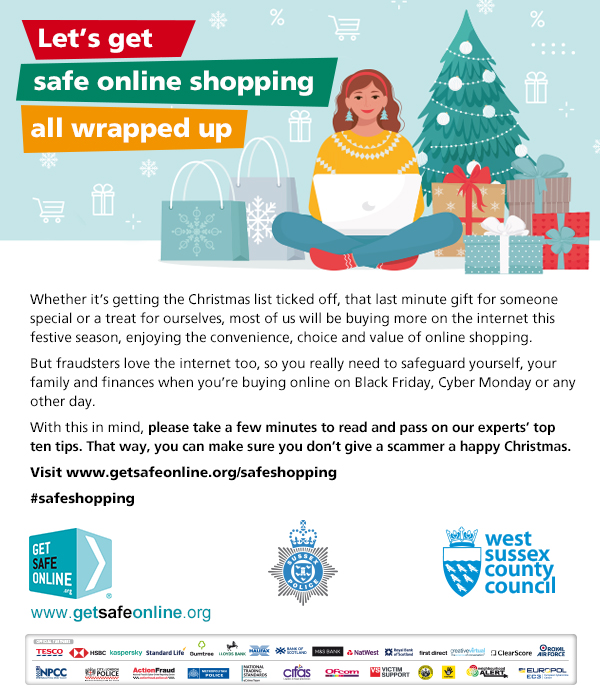
West Sussex County Council in partnership with GetSafeOnline.org have launched this years Christmas / Black Friday Safe Shopping Campaign.
Please take a moment to look at the excellent tips below and lets all keep safe online this year as we shop for our loved ones.
You can click the image opposite to view a poster, or click the button below to visit the getsafeonline.org safe shopping page.
Keep your Christmas, Black Friday and Cyber Monday shopping safe
Whether it’s getting the Christmas list ticked off, that last minute gift for someone special or a treat for ourselves, most of us will be buying more online this festive season.
It’s fantastic being able to take advantage of the convenience, choice and value brought by the internet, but unfortunately it is also a favourite haunt of fraudsters, vying to take advantage of the fact that you have so many distractions in the lead-up to Christmas.
That why it’s especially important to safeguard yourself, your family and finances when you’re buying online on Black Friday, Cyber Monday or any other day.
Please read our expert, easy-to-follow safety tips to help protect you from falling victim to seasonal scams, and be sure to pass them on.
Website
Make sure a website is authentic by carefully checking the address is spelled correctly. Ideally, type it in rather than clicking on a link in an email, text or post. It’s easy for scammers to set up fake websites that are very similar to the real thing.
Payment pages
Make sure payment pages are secure by checking that addresses begin with ‘https’ (‘s’ is for secure) and there’s a closed padlock in the address bar. The https and closed padlock mean that the page is secure, but the site could still be operated by fraudsters.
Social Media
Social media sites/apps and online forums are a popular place for advertising gifts, tickets and holidays. Many are genuine, but you need to be aware that others are fraudulent. Be extra vigilant about checking that such ads are authentic.
Money Transfers
However desperate you are to buy that late present or an item that’s in short supply, don’t pay for it by transferring money directly to people or companies you don’t know. If it’s a fraud, your bank may not be able to recover or refund your money. If you can, pay by credit card. The same goes for holidays, travel and tickets.
Log out
Log out of the web page or app when payment is completed. Simply closing it may not log you out automatically.
Fake Goods
Don’t knowingly buy fake or counterfeit goods and do all you can to make sure brands you do buy are genuine. Fakes are of inferior quality, contravene copyright law and affect the livelihoods of workers who make the real thing. They can also be unsafe in use..
Free Trials
‘Low-cost’ or ‘free’ trials can cause problems if you don’t read the small print and look for independent reviews. Whether they’re for the latest handset or slimming pills, you could be signing up for large monthly direct debits which are very hard to cancel. And if it’s for slimming or any other pills, check our advice on Buying Medicines Online on the Get Safe Online website.
Fraudulent emails
Text messages
Christmas Breaks
Check that Christmas or New Year breaks you book online are genuine by carrying out thorough research. Look for independent reviews, and make sure travel agents / tour operators are genuine by checking for an ABTA/ATOL number. It’s always best to pay by credit card for extra protection.
How to report Fraud
If you think you’ve been a victim of online fraud,report it to Action Fraud, the UK’s national fraud and cybercrime reporting centre on 0300 123 20 40 or at www.actionfraud.police.uk
In Scotland, report fraud to Police Scotland by calling 101.